Hackathon on three-dimensional urban tree monitoring (Bratislava, 1–5 June 2026)
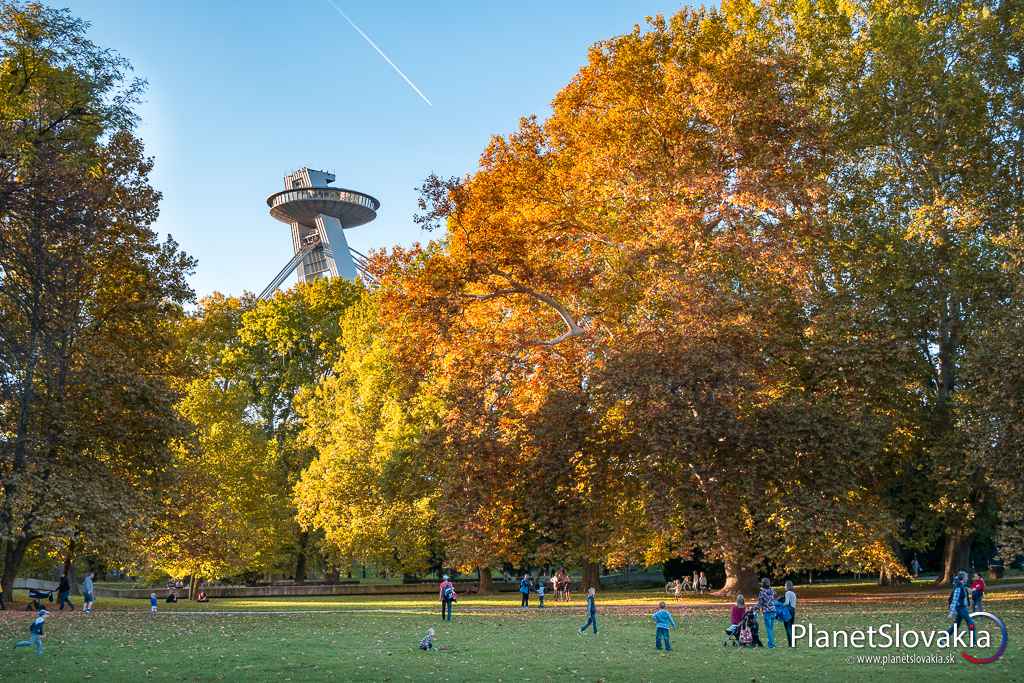
We are organising a hands-on hackathon focused on ground-based LiDAR and close-range sensing for urban trees, taking place 1 – 5 June 2026 in Bratislava (Slovakia). The week will combine rapid field data collection, open-source processing, and stakeholder engagement to turn state-of-the-art methods into practical, implementable workflows for city tree management.
Aim
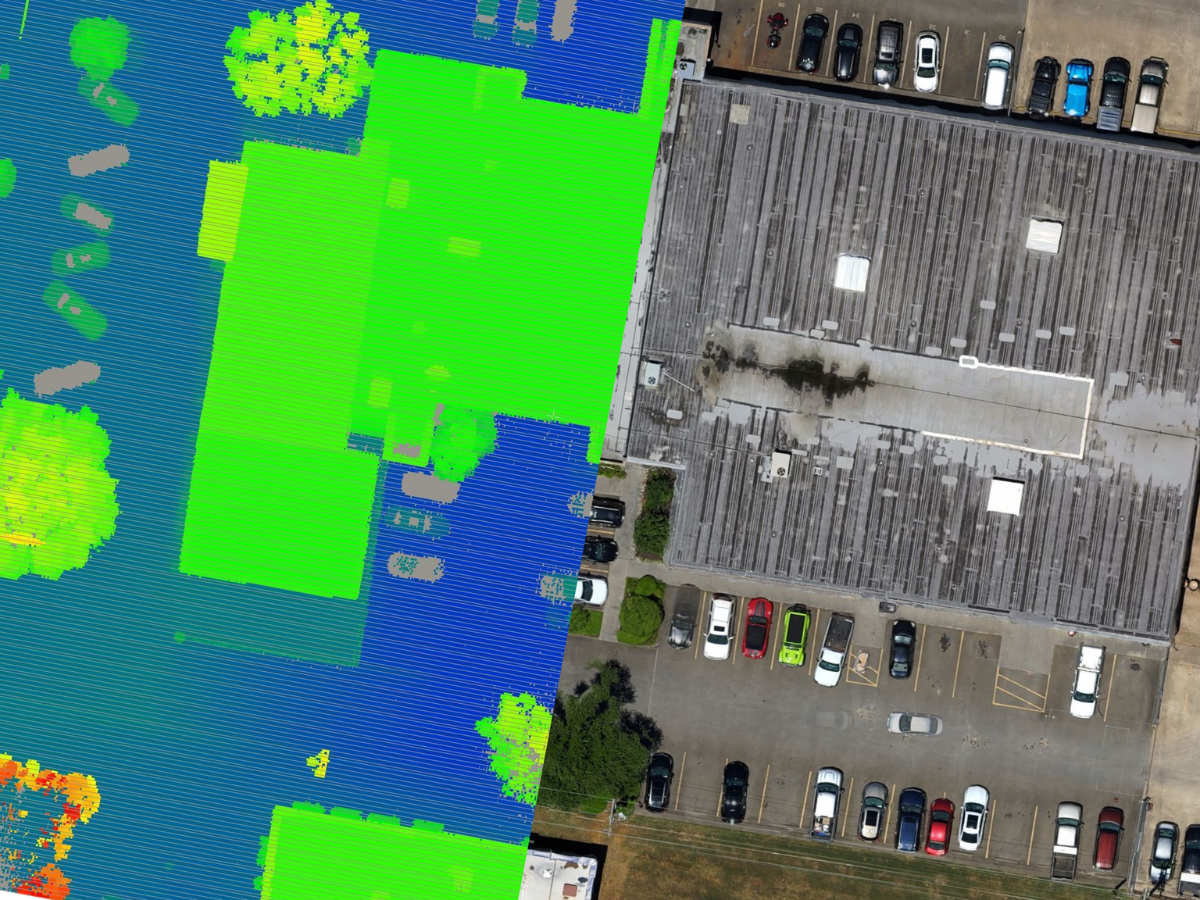
Develop and document end-to-end, open workflows for capturing and processing close-range 3D data (TLS/MLS/handheld/mobile/iPhone LiDAR) to derive individual-tree metrics relevant to urban inventories and management.
Expected deliverables (outputs)
During and following the hackathon, we aim to deliver:
- Open-source workflows for data collection and processing that can be directly implemented in practice (to be published as a documented workflow, and used in a policy brief and manuscript).
- Training materials (ideally short training videos alongside the written workflows).
- Policy brief on the use of ground-based LiDAR for monitoring individual urban trees.
- Scientific manuscript benchmarking LiDAR sensors and processing solutions, with an emphasis on usability for operational city inventories.
- Catalogue of “tree blueprints” (visual summaries per tree) suitable for broader public communication.
We also aim (subject to feasibility) to engage stakeholders through a roundtable in Bratislava with the municipal/government body responsible for urban tree management to discuss implementation pathways and priorities, and engage with local media to increase public visibility of three-dimensional urban tree monitoring and evidence-based management.
What we will do during the week
Field work (approx. first 2–3 days)
We will collect data across multiple urban sites using a range of close-range sensing systems (LiDAR and imagery), including (indicative list):
- RIEGL VZ-series TLS (e.g., VZ-600i)
- Hovermap STX
- FARO (e.g., Orbis / Focus-class TLS)
- GeoSLAM mobile scanner
- Prototype mobile laser scanning (MLS) systems
- iPhone/iPad LiDAR scanning
We aim to include ground-based data collection, for example, using GNSS to determine tree positions and identify tree species for all scanned trees.
Processing (approx. last 2-3 days)
Teams will implement and compare processing pipelines to extract individual-tree parameters, such as:
- Tree location / stem map
- Diameter(s) (e.g., DBH and multi-height diameters where data quality allows)
- Tree height
- Crown metrics (extent/shape proxies as appropriate)
- Above-ground biomass proxies (where justifiable from the data/inputs)
- Data quality and uncertainty notes (what works well / fails, and why)
Outputs will be consolidated into workflow documentation and a short “showcase” for the stakeholder roundtable.
Organisers
- Tomáš Goga – Slovak Academy of Sciences (Slovakia)
- Martin Mokroš – University College London (United Kingdom)
- Carlos Cabo – University of Oviedo (Spain)
- Jozef Výbošťok – Technical University in Zvolen (Slovakia)
- Miloš Rusnák – Slovak Academy of Sciences (Slovakia)
Provisional schedule (high level)
- Monday (AM): Devices overview, study sites, team formation, field plan
- Monday (PM): Data collection + logistics
- Tuesday: Data collection + training video capture (as feasible) + evening keynote/social session
- Wednesday: Data collection + start processing + evening keynote/social session
- Thursday: Processing sprint + workflow write-up
- Friday (AM–early PM): Team presentations + synthesis
- Friday evening: Depart / optional extra night
(Exact timings may be adjusted based on the final number of participants, weather, and site access.)
Who should apply
We welcome applicants with experience in one or more of the following areas:
- Close-range sensing / point clouds: TLS/MLS/handheld scanning, acquisition design, field protocols (data collection experience desirable)
- Point cloud processing (required for most roles): registration, SLAM outputs, denoising, segmentation, stem detection, tree metric extraction
- Coding: deploying standalone tools and plugins; Python / R / Matlab packages; reproducible workflows
- Urban forestry / inventories: operational constraints, target variables, quality assurance
- Science communication / training content: creating short, clear video or written guides
- Policy translation: turning technical outcomes into implementable guidance for public bodies
What you will gain
- Intensive, hands-on collaboration with an international group of practitioners and researchers
- Access to a diverse set of sensors and datasets collected under comparable conditions
- Contribution and co-authorships in the resulting workflow publication(s) and planned outputs (policy brief and manuscript), depending on role and contribution
- Direct interaction with real municipal stakeholders and constraints, valuable for impactful research and implementation
Participation fee & support:
No registration fee.
COST action INTUF will reimburse the costs of selected participants’ travel, accommodation and subsistence. Only applicants from COST countries (https://www.cost.eu/about/members/) are eligible for reimbursement. The costs will be reimbursed only after the summer school is completed. Applicants from outside these countries can also apply, but they must provide their own funding.
Follow-up opportunity (STSM)
To ensure the hackathon outputs are finalised to publication standard, we plan to select one participant for a Short-Term Scientific Mission (STSM) follow-up (approx. 1-2 months) after the event, focused on consolidating processing, drafting the workflows, and supporting the policy/manuscript outputs. The host location will be agreed with the organisers and the selected candidate.
How to apply
Please complete the application form:
Application form: https://forms.gle/GbJqFSXWWHias1MG8
You will be asked for:
- Short abstract and motivation, and CV (PDF)
- Tools you can work with (software packages, languages, pipelines)
- What you want to contribute during the week (specific tasks)
- Whether you can bring or support any hardware/software setups (optional)
Evaluation of applications
Applications will be evaluated by the organising committee based on scientific relevance, motivation, and technical experience. Particular attention will be paid to the applicant’s motivation letter, the relevance of the applicant’s current research to the hackathon topic, experience with close-range sensing technologies, point cloud data processing, and urban tree monitoring or management.
Additional criteria include career stage (with priority given to early-stage researchers), interdisciplinarity, and the overall balance of countries, institutions, and expertise to ensure a diverse and productive group of participants.
Applicants from COST countries will be prioritised for reimbursement in accordance with COST rules. In case of similar evaluation scores, diversity considerations and practical contribution to the hackathon activities may be used as tie-breaking criteria.
Motivation Letter (10p); CV (3p); Abstract (5p); Research interest (5p); Position (3p); Close-range tech experience (5p); Point cloud processing (5p); Tools & implementations (5p); Urban tree monitoring (5p)
Important dates
- Call opens: February 2026
- Application deadline: 31st March 2026
- Notification of results: no later than 7th April 2026
Questions
For questions, please contact: tomas.goga@savba.sk and m.mokros@ucl.ac.uk